Getting Ready for Christmas: A Craft Plan
A handmade Christmas does not begin in December. It begins quietly in autumn, while the fabric is on the shelves, the evenings are long enough for slow work, and nothing is urgent yet. A Christmas craft plan is simply the decision to start early.
The point is not to do more. It is to spread a few good projects across the weeks ahead so that the last days before the holiday hold finishing and wrapping rather than panic and shortcuts.
Why a Plan Beats Good Intentions
Most handmade holidays go wrong in the same way. Everything is chosen in one hopeful moment, and then the whole list is left until the calendar is crowded and the evenings are short.
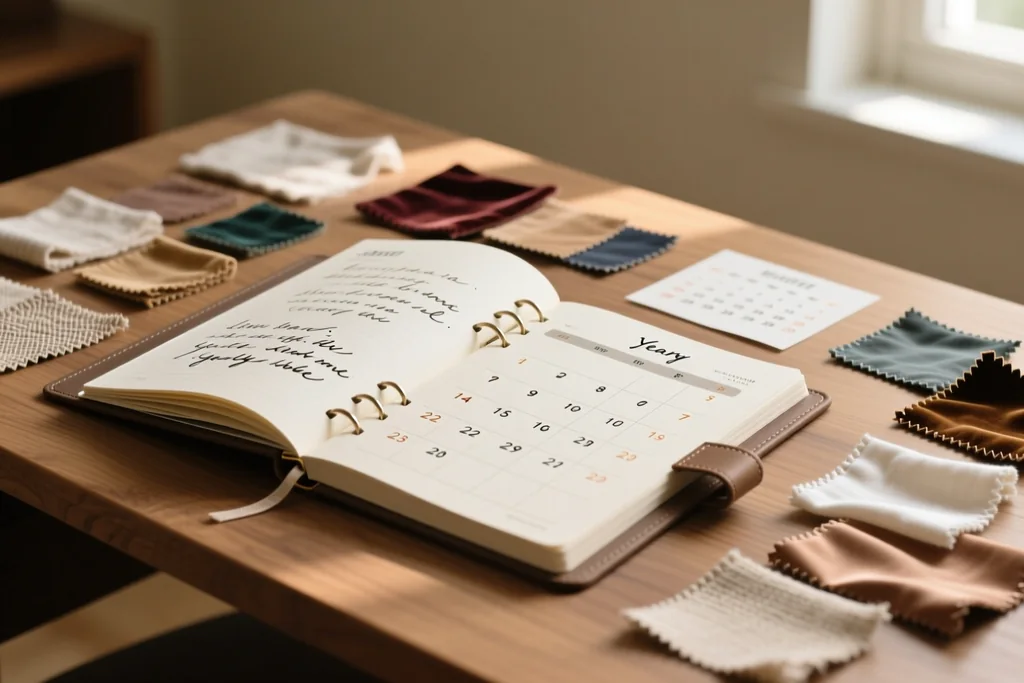
A Christmas craft plan avoids that by naming a modest number of projects and giving each one its own stretch of time. What is written down tends to happen; what is only imagined tends to slide into the week with the least room for it.
Write the plan on one sheet and keep it near the machine. A page you can see is worth more than a careful list stored somewhere sensible.
Keep the plan small as well as visible. Three projects finished are worth more than eight begun, and a short list is the one you will actually follow.
Choose the Projects That Carry the Season
Two kinds of project belong on the list. The first is the decoration, the ornaments and textiles that make the house feel like the holiday is coming.
The second is the gift, which needs more time and more fabric. Any handmade gift is welcome, but the ones people keep are usually the useful ones: a cushion cover, a table runner, a quilted throw.
Pick one large project and several small ones. The large project gives the season its shape, and the small ones keep the work moving on days when you only have half an hour.
Write the name of the person beside each gift while the idea is fresh. Choosing fabric for a known face is much easier than sewing for a vague list of relatives.
The Plan at a Glance
The table below shows how a relaxed plan can be laid out, moving from the first autumn weeks to the final days before the holiday. It is a Christmas craft plan in its simplest form.
| Stretch of the season | Projects that suit it | What to prepare |
|---|---|---|
| Early autumn | Quilted throws and larger gifts | Choose fabrics and cut the pieces |
| Mid autumn | Ornaments and small gifts | Sew in short, regular sessions |
| Late autumn | Quilting and binding | Gather ribbon, thread and wrapping |
| Before the holiday | Table linens and finishing touches | Keep the work simple and quick |
A plan like this leaves room for illness, visitors and ordinary life. If a project falls behind, move it to the following year rather than spoiling the weeks that are left, and remind yourself that the holiday will arrive either way.
Keep the finished pieces together in one place as the season goes on. A shelf or a box set aside for gifts makes the whole plan feel real, and nothing gets mislaid in the last busy days.
Gifts That Travel Well
Some handmade gifts are easier than others to give away. Flat pieces such as runners, mats and small wall hangings fold neatly, post cheaply and fit almost any home.
Textiles for the kitchen are always useful and quick to make. A pair of oven mitts, a tea towel trimmed with fabric or a set of napkins takes an afternoon and looks generous.
If you are unsure about a gift, choose the fabric first and the project second. A cloth you like will find its person.
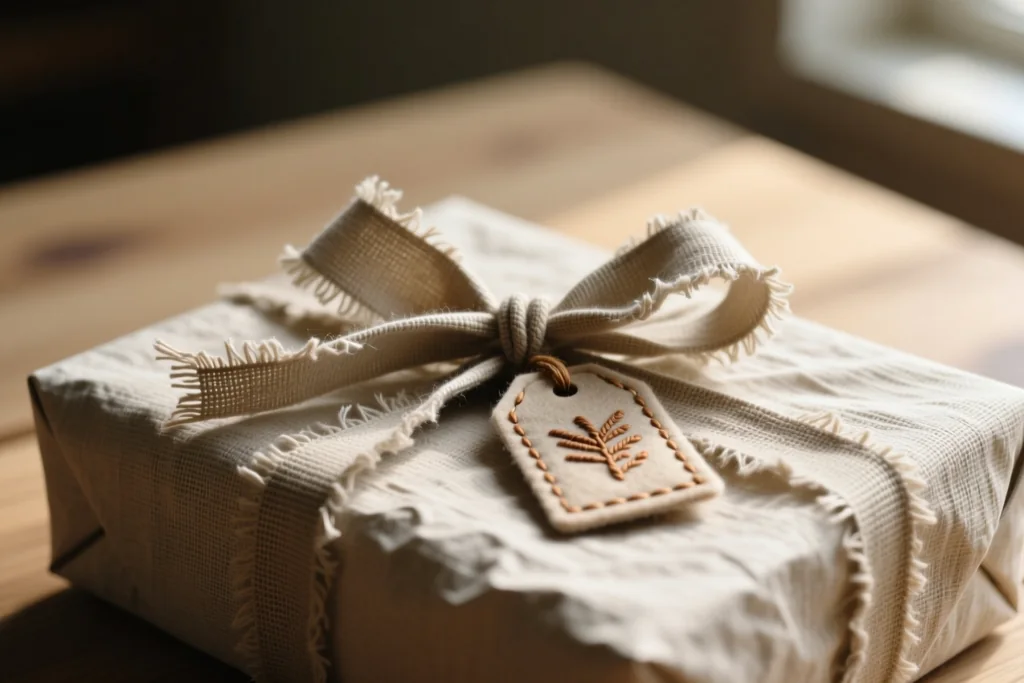
Anything that can be posted is a gift twice given, because it arrives as a surprise. Flat, light pieces suit this better than anything bulky, and a quilted mat will fold into an envelope sized parcel.
Decorations for Tree and Table
Ornaments are the perfect small project for the weeks before the holiday. They use scraps, they are finished in an evening, and a collection builds up quietly over the years.
Fabric baubles, small stuffed shapes and folded stars all hang well. If you make them in the same palette, the tree looks considered rather than crowded.
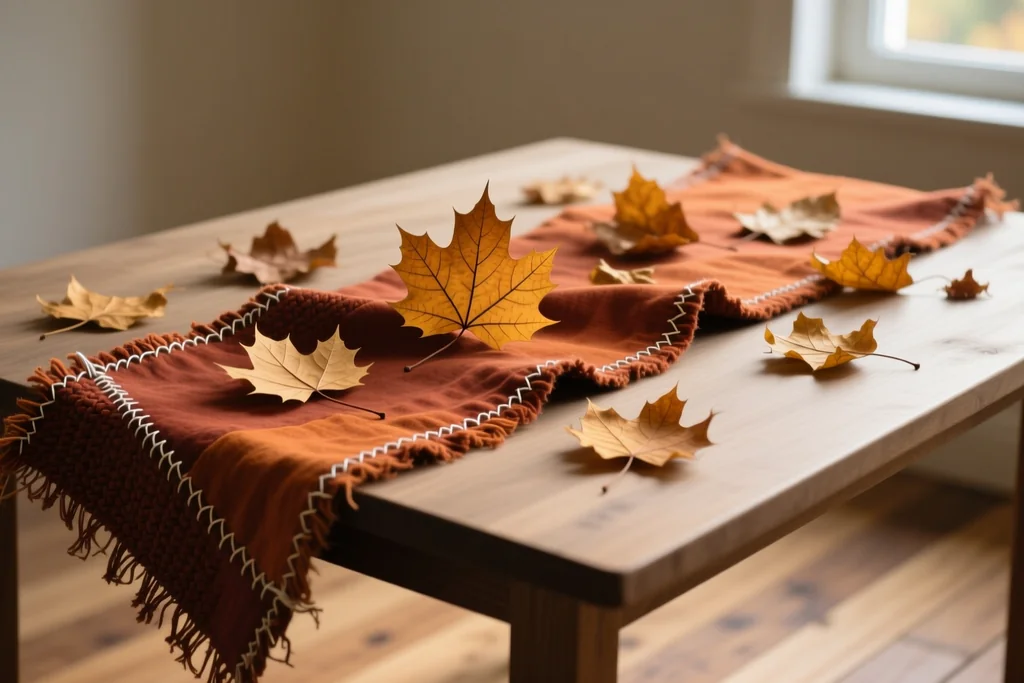
For the table, a runner in festive tones and a set of quilted mats do more than any centrepiece. They are also the pieces guests touch, so they earn their making and get used year after year.
Store the ornaments you make in a labelled box, with the year written inside the lid. Opening it next season is half the pleasure of having made them.
Fabric, Thread and Notions to Gather
Buy the main fabric early, while the seasonal prints are still plentiful. Cotton and linen in deep tones work for both decorations and gifts, so a generous length rarely goes to waste.
Check your thread, needles and batting before you begin. Running out mid project is the most common reason a handmade gift is finished in a hurry, or not at all.
Keep a box for offcuts as you work. It becomes the source of next year's ornaments, and nothing useful ends up in the bin.
Buy one extra length of the backing and binding you like best. It is the part most often missing, and having it on the shelf saves a journey out.
Keeping the Season Calm
These small habits keep a craft Christmas pleasant rather than pressured.
- Finish one project before starting the next large one.
- Keep a quick project cut and ready for tired days.
- Set a date to stop making and start wrapping.
- Write the gift list beside the plan, not in your head.
- Leave one project deliberately unfinished for the quiet days after the holiday.
Handmade holidays are remembered for how they felt rather than for how much was produced. A calm plan is what makes that possible.
Start with the first project this week and let the rest of the plan wait on the page. By the time the holiday arrives, most of the work will already be behind you.