Crafting and Healthy Ageing: Why Hands Stay Busy
Retirement changes the shape of a week. The obligations that once filled the days are gone, and the hours are suddenly your own, which sounds restful and can feel strangely empty until something claims them.
Crafting claims them well. For many people, crafting for seniors is not a hobby so much as a rhythm, a reason to sit down at the table each day and finish something that did not exist before.
Why Busy Hands Suit Retirement
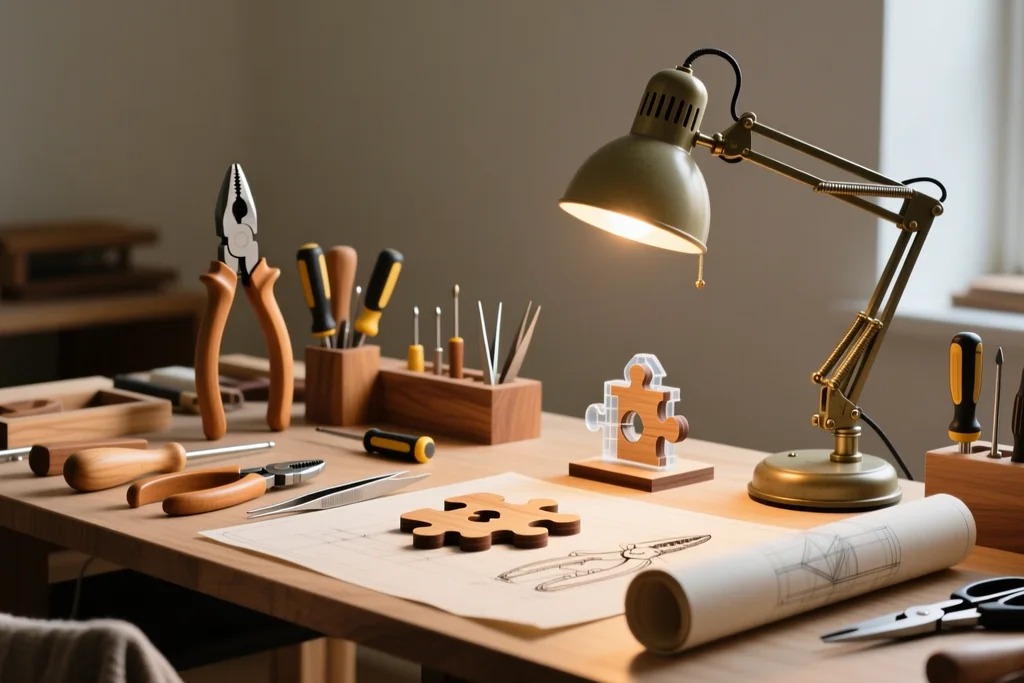
Creative work gives a day a centre. It does not demand much: a table, decent light and a project that is waiting, and the hours arrange themselves around it.
It also measures progress honestly. A seam sewn is a seam sewn, and a corner turned neatly is a small, unmistakable achievement on a day that might otherwise have slipped past unmarked.
Best of all, it can be gentle. Nothing about good craft work requires speed, and the slower a project is, the more days it fills.
It gives the morning a beginning, too. Sitting down with a project marks the start of the useful part of the day, and there is rarely a good reason to postpone it.
Routine, Purpose and Progress
Three quiet things come from regular making, and they appear in the week in very ordinary ways.
| What crafting gives | How it shows up |
|---|---|
| Routine | A familiar hour at the table, with good light and the tea in reach |
| Purpose | A project chosen for someone, or for a room that needs it |
| Progress | Visible change in the work, from first cut to finished edge |
| Company | Friends met over a shared table, online or nearby |
None of these arrive all at once. They build slowly, the way a quilt does, and after a season you notice that the days have more shape than they did before.
A routine also makes beginning easier. When the hour is fixed and the work is already out, there is no decision to make and no reason to put it off.
Choosing Work That Fits the Day
Some days suit the machine, others only a needle. Keeping both kinds of project ready means no day is wasted and no project is abandoned because it asked for more energy than was available.
Machine work is best saved for the alert hours. It needs attention, good light and a clear surface, and it should never be done while tired or rushed, however tempting the last few seams are.
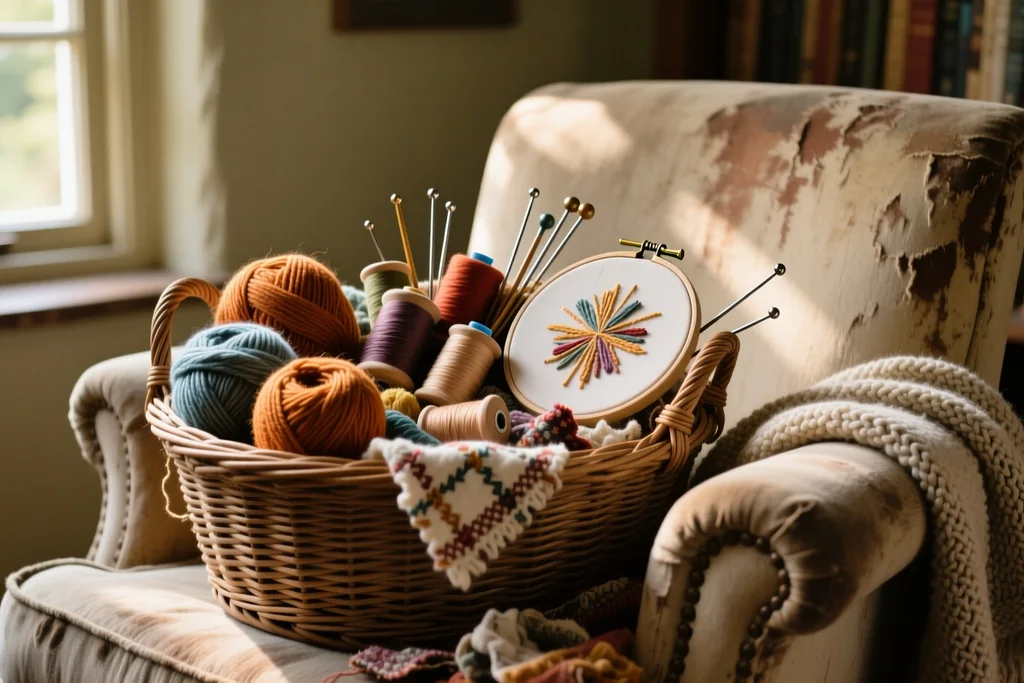
Hand work fills the rest generously. Embroidery, hand piecing and binding can be done in a comfortable chair, in short stretches, with something on the radio beside you.
Keep it varied as well. A quilt, a small gift and a mending basket give three different moods of work, and choosing between them is part of the pleasure.
Sitting Well and Working Longer
Comfort decides how long you can work, and it is worth arranging properly. A chair with real back support and a table at the right height will do more for a long session than any gadget.
Light matters just as much. Bring the lamp close to the work rather than across the room, and choose a bulb that shows colours truly, because judging fabric in poor light is unfair to yourself and it shows in the finished piece.
Take breaks before you need them. Standing, stretching and putting the kettle on keeps a session pleasant, and coming back to the table is easier than starting from cold.
Keep the floor clear, the cable out of the way and the things you reach for most within arm's length. Much of the frustration at a sewing table comes from stretching for something.
Making for Other People
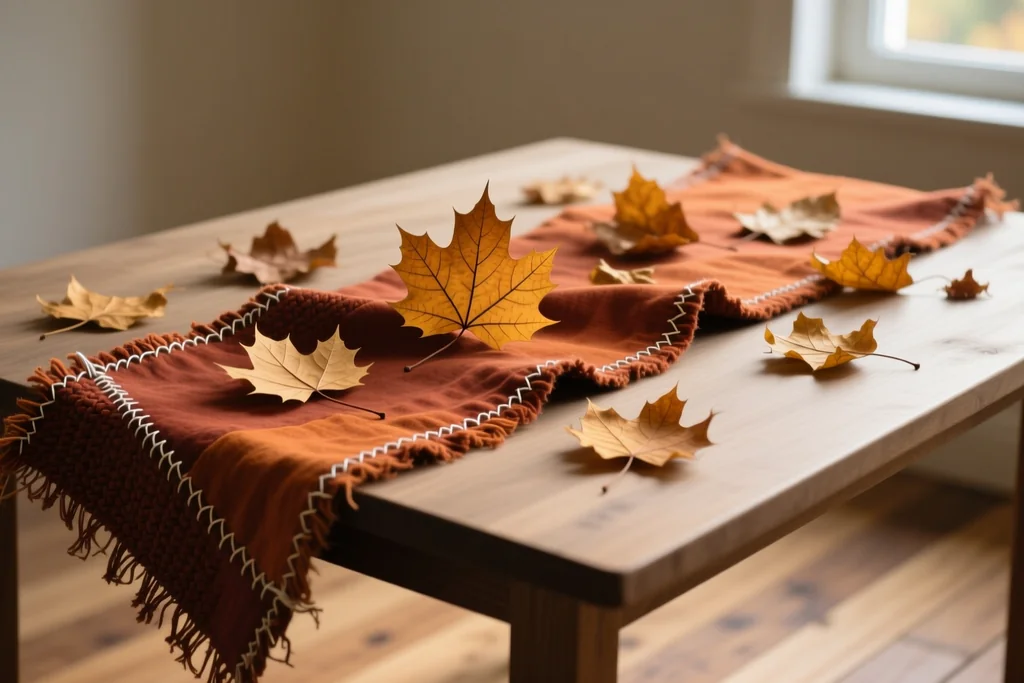
Gifts give the work somewhere to go. A cushion cover, a table runner or a small quilt carries a message a bought present cannot, and the making often holds more of the giver than the object does.
There is satisfaction in making for the house itself as well. Curtains, covers and quilts that are used daily keep giving long after the last stitch, and they are the reason a handmade home feels different.
If the cupboards fill up, making for a group or a sale is a good reason to keep going. Work with a destination is easier to start than work kept only for yourself.
Ask before making for someone else's room. A gift that suits the colours they already live with will be used, and one quick question saves both the fabric and the feeling.
Small Habits That Keep It Enjoyable
A few habits keep the table inviting over the years.
- Leave the machine threaded and the current project out, so starting takes no effort.
- Keep a small basket of easy hand work for tired days.
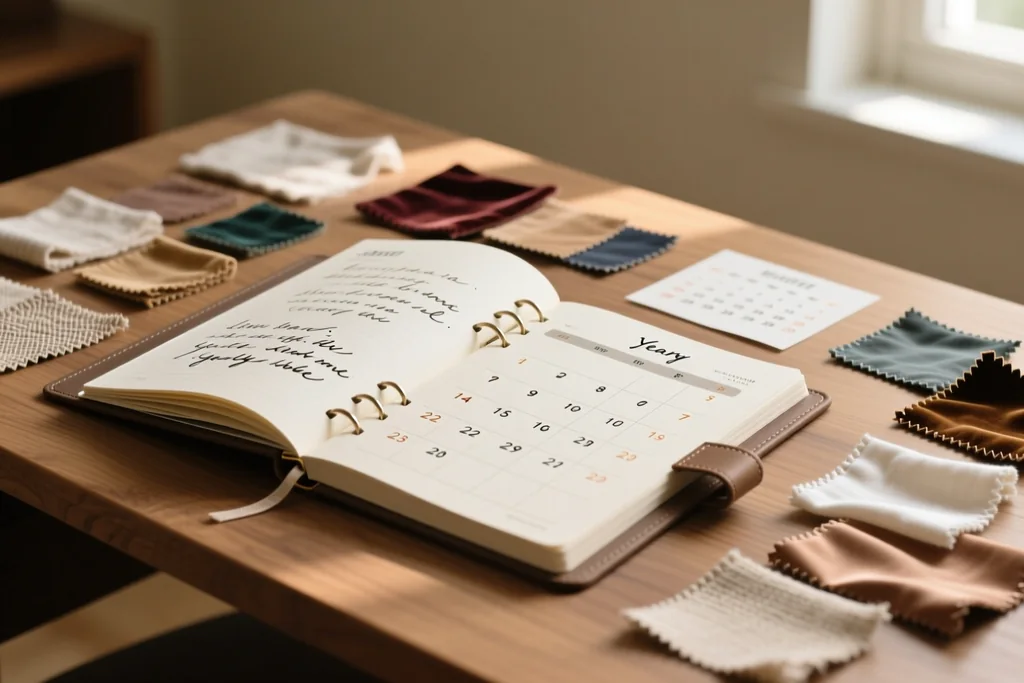
- Sort fabric by colour and size, so a new idea can begin straight away.
- Write down what you learned on each project while it is still fresh.
- Stop while the work is going well rather than at the point of frustration.
- Give away or repurpose anything finished long ago and no longer loved.
None of this is complicated, and that is the point. Crafting for seniors works best when it is ordinary, unhurried and already laid out on the table.
Keep the tools you use daily within reach rather than in a cupboard. The shorter the distance between deciding to work and starting, the more often it happens.
A Life With Something On the Table
Healthy ageing is not one single habit, and no craft promises anything more than a good way to spend an afternoon. That is already a great deal.
There is no need to make anything remarkable either. A simple project finished well gives more pleasure than an ambitious one left half done in a bag.
The pleasure lies in the ordinary parts: choosing fabric, cutting carefully, unpicking a mistake without annoyance, and finishing something with your own hands.
Keep something on the table, keep the light good, and keep the next project in mind. The days take care of themselves when there is work you are glad to return to, and that is the best test of a hobby there is.