Halloween Decoration Ideas You Can Sew
Halloween is the one holiday where the sewing room can do almost all of the decorating. Fabric turns into bunting, pumpkins, table linens and window hangings, and most of it comes out of the stash you already have.
The secret is to settle on a look before you pick up the scissors. With a colour plan and a few simple shapes, halloween decoration ideas stop being a list of things to buy and become a set of things to make.
Choose a colour plan first
The classic pairing of orange and black is hard to improve on. Add a deep purple or a mossy green and the whole house begins to feel like one celebration instead of a collection of odd pieces.
Pick two main colours and one accent, then hold every fabric choice against that decision. A pumpkin made in the right orange will look deliberate even if the stitching itself is very simple.
Texture matters as much as colour. Felt, flannel, burlap and quilting cotton behave differently, and mixing a matte fabric with a slightly shiny one gives depth without any extra work.
Bunting and window hangings
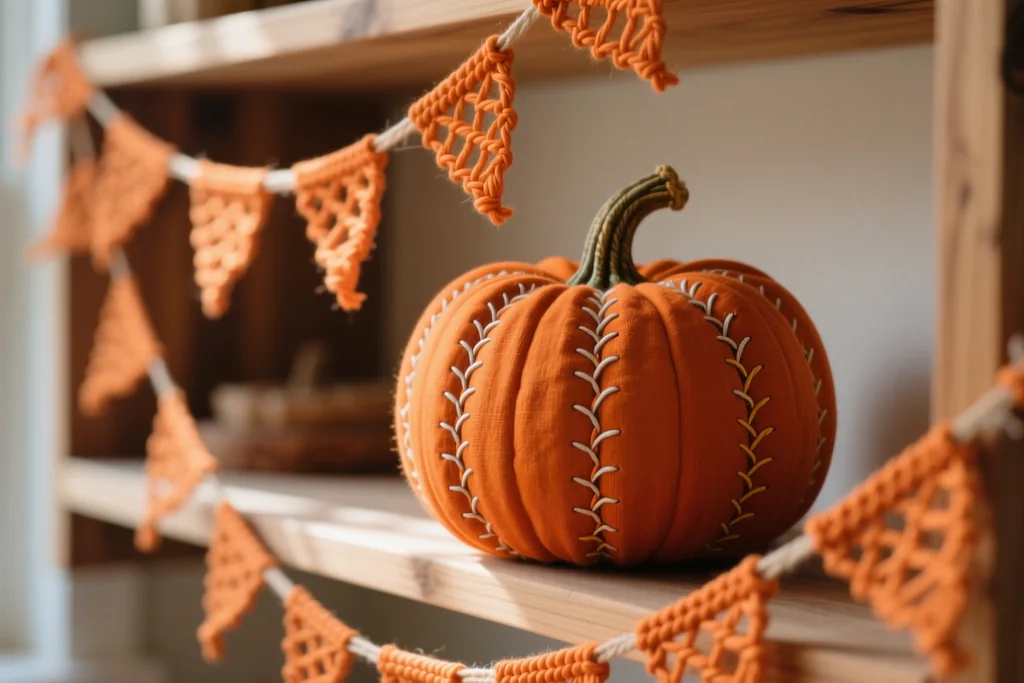
Bunting is the fastest decoration you can sew. Cut triangles or simple rectangles, sew them to a length of bias binding or wide ribbon, and you have something that dresses a mantel or a doorway in a single evening.
For the window, a narrow fabric panel with a Halloween motif appliqued in the middle reads clearly from the street. A sleeve at the top takes a tension rod, so nothing has to be fixed to the frame.
Choose a fabric that does not fray badly for bunting, or finish the raw edges with a quick zigzag. Folding the binding over the raw edge also keeps the pennants hanging straight instead of curling at the corners.
Hang a few small stuffed shapes from a length of thread across the window and let them turn slowly. Movement is what makes a window decoration interesting once the light has gone.
Soft pumpkins and fabric gourds
A stuffed fabric pumpkin is exactly the sort of project that suits an evening in front of the television. Cut two oval shapes, sew around the edge, turn, stuff, and draw the sides in with a few long stitches.
Make them in three sizes and pile them on a tray or along a shelf. A small felt stalk and a curled tendril of cord finishes the shape and gives it a little character.
Stuff them firmly but not tightly, because an overfilled pumpkin looks round rather than ribbed. The long stitches that pull the sides in are what give the shape its character.
Fabric gourds use the same method with a longer, narrower shape. They last from year to year, they never rot on the porch, and they cost nothing but the scraps in the bottom of the basket.
Table toppers and runners
A runner is the quickest way to make a room acknowledge the season. Orange and black strips, a simple pieced block or a plain linen runner with one appliqued motif all work beautifully.
A plain band of stitching across each end adds weight and keeps the runner sitting flat. Bind the ends in a contrasting colour if you want the finish to read as a frame.
Napkin ties and small fabric coasters take almost no time at all and make the whole table look considered. A set of six can come out of one bundle of scraps.
| Decoration | Fabric to use | Time and skill | Where it works best |
|---|---|---|---|
| Bunting | Quilting cotton or felt | An evening, beginner | Mantel, doorway, porch |
| Window panel | Light cotton | An afternoon, beginner | Front window |
| Soft pumpkin | Felt or flannel | An hour each | Shelves and side tables |
| Table runner | Cotton, linen or burlap | An afternoon, easy | Dining table |
| Hanging shapes | Felt and narrow ribbon | Very quick | Windows and doorways |
| Coasters and ties | Small scraps | A short session | The table setting |
A table like this is useful when you are deciding how to spend a wet afternoon. Start with the pieces that will be seen first, then fill in the smaller ones while you are still in the mood.
If you are sewing for a porch or a doorway, choose a heavier fabric that will hold up to the weather. Indoors, the lightest cottons and felts are perfectly happy and far easier to work with.
Lighting and the finishing touches
Fabric decorations change completely once there is a warm light behind or beside them. A small battery lantern on the porch, or a few low lamps indoors, turns felt and flannel into something far more atmospheric.
Keep real flames well away from loose fabric, and choose lights that run cool. A short string of small bulbs tucked inside a fabric pumpkin gives a soft glow with no risk at all.
Group your makes together rather than spreading them around. Three pumpkins on one shelf read as a display, while one pumpkin on every shelf reads as clutter.
A single warm light also shows off texture, which is the whole reason fabric decorations are worth the effort at all. Plastic has shine, while felt and flannel have depth.
Making the decorations last
Store the fabric pieces in a labelled box with a sheet of tissue between the pumpkins so they keep their shape. A cedar block or a dried lavender sachet keeps the box smelling fresh all year.
Wash only what really needs washing, because most fabric decorations are happier spot cleaned and aired than put through a machine. Repair a loose stitch when you notice it, before it becomes a hole.
Write the year on the underside of anything you make and keep a short list of the pieces in the box. It saves time next October when you are deciding what to add.
- Keep the pieces flat and layered with tissue so the shapes hold.
- Repair a loose stitch as soon as you spot it, before it grows.
- Label the box by year so you know what you already have.
- Air everything outside on a dry day before it goes back into storage.
Making your own halloween decoration ideas means the box gets a little fuller every year. That is the nicest kind of collection, because every piece carries the memory of the evening you made it.