Table Runners and Placemats for Every Season
A table runner pattern is the smallest project that can change a whole room. Cut a long strip of fabric, finish the edges, and an ordinary table suddenly looks as though someone took trouble over it.
Runners and placemats are also the most forgiving work in the sewing room. They give you somewhere to try a new fabric or use a leftover piece, without committing to a whole quilt.
Why Table Linens Change a Room
A bare table is practical but plain, and the gap between plain and finished is small. A runner adds colour in the one place the eye rests at every meal, without covering the wood you like.
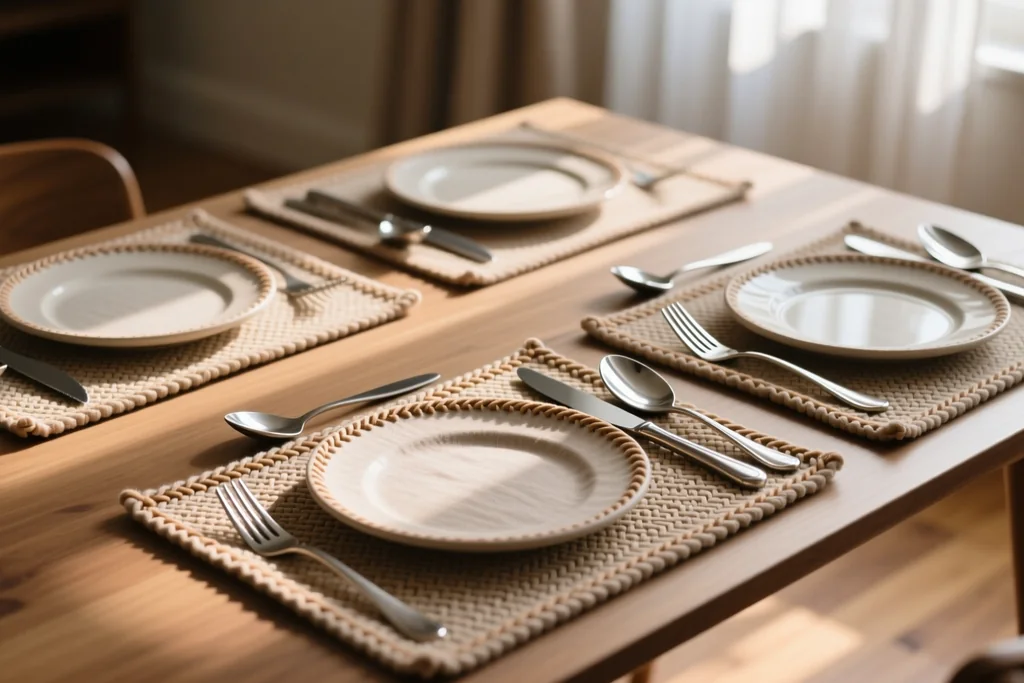
Placemats do the opposite job. They mark a place, protect the surface and make a table look set rather than merely cleared, and they can be washed far more easily than a full tablecloth.
Both are fast projects. A set of four placemats and one runner can be cut and finished in an afternoon, which makes them ideal when you want to make something without starting a long commitment.
The nicest part is that linens can be changed in minutes. A runner rolled away in a drawer and swapped for another in a different fabric changes the mood of a dining room more than any small ornament could.
Fabric That Survives the Table
Table linens live a harder life than most sewing projects. They meet hot dishes, spills, cutlery and constant washing, so the fabric has to be chosen for endurance rather than appearance alone.
A firm cotton or a cotton and linen blend is the safest choice. It takes repeated washing, presses crisply and holds its shape, while very light or very loose fabrics fray at the edges and lose their body quickly.
Dark and many-coloured prints hide the marks that plain pale cloth shows at once. If you want a pale linen look, plan on washing it more often, or accept the softened worn look as part of its charm.
Pre-wash the fabric before you cut if the linens will be washed often. A cotton that shrinks after the first wash pulls a runner out of shape and leaves the placemats slightly different sizes from one another.
Length, Width and an Easy Shape
A runner should hang a little over each end of the table, so it reads as a deliberate strip rather than one that came up short. Lay a length of fabric on the table and look at it before you cut.
For width, the most restful proportion is roughly a third of the table's width. Narrower strips look delicate on a long table and wider ones suit a small one, and there is no single right answer.
Placemats want to be a little wider than the plate they carry, with room at the edges for cutlery. Cut one, put a plate on it and try it at the table before you cut the rest of the set.
A Simple Quilted Finish
A quilted runner is only a sandwich of two fabrics with a thin layer between them, stitched in lines. It lies flatter than a single layer of cloth, protects the table better and looks far more considered.
Quilt in straight lines at an even spacing, or follow a stripe in the fabric to keep the lines true. A walking foot helps the layers feed evenly and stops the fabric from creeping as you stitch.
Finish the edges with a binding strip sewn around the whole piece, or with a double fold turned to the back. Binding gives a firmer border, while a fold is quicker and softer in the hand.
Linens for Every Season
The reason I keep one table runner pattern on hand is that the same shape sews up in any fabric, and the table changes with the year. The table below is how I choose.
| Season | Fabric that suits it | Finish that works |
|---|---|---|
| Spring | fresh light cottons and small prints | simple double-folded hem |
| Summer | linen and cotton blends in pale tones | hemmed and unquilted, for a light drape |
| Autumn | warm checks and russet or gold tones | quilted in straight lines for weight |
| Winter | deep colours and heavier cotton | quilted with thin batting for warmth |
A second set of linens is the cheapest way to redecorate a table, and a runner with matching mats in a seasonal fabric takes an evening rather than a weekend. Store the sets together so they are easy to swap.
Keep the shape consistent between sets. If every runner is cut to the same length and every placemat to the same size, a replacement will match the table instantly and none of your work is wasted.
Quilted pieces are also more comfortable to eat over and to write on, because the filling gives a little under a plate. Heavier linens stay put on a polished surface instead of sliding about at the first touch.
Washing, Storing and Rotating
Wash table linens after a few uses rather than leaving stains to set, and wash them with like colours. A gentle cycle with a short spin keeps the edges from fraying and the shape from stretching.
Press while the fabric is still slightly damp, and store sets rolled rather than folded in the same place every time, which is what works a crease into the cloth.
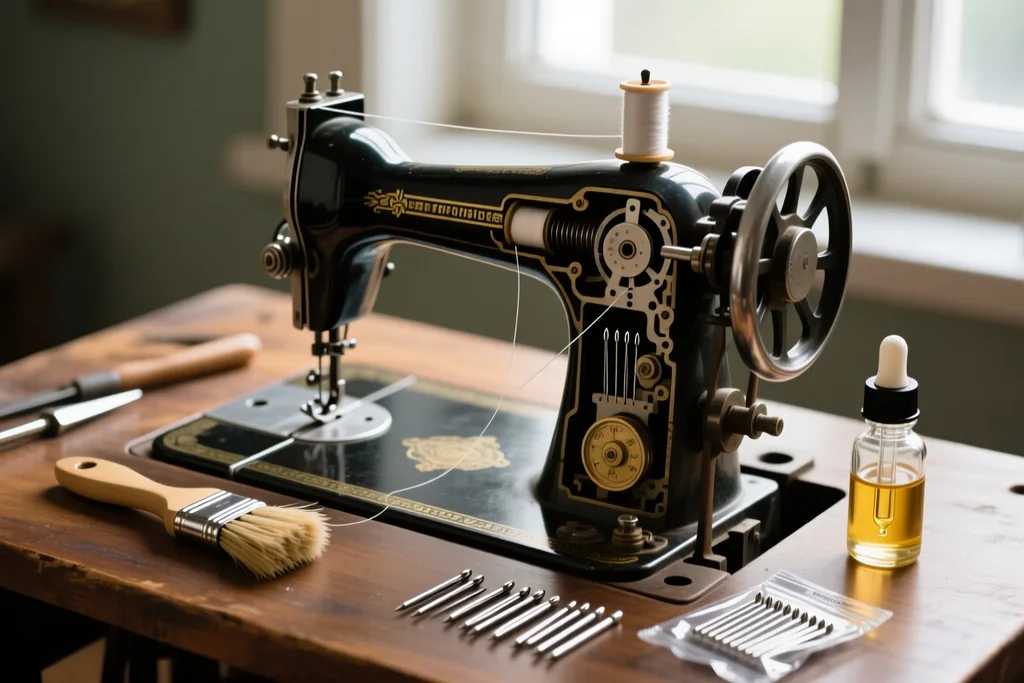
A small repair kit lives with the sets: a needle, thread in the two colours you use most and any spare buttons. A pulled hem can then be fixed on the spot instead of being put away in a mending pile.
- Treat spills at once by blotting, not rubbing, with a clean cloth.
- Wash with like colours and a gentle detergent on a short cycle.
- Press damp fabric flat and let it dry fully before storing.
- Rotate two sets so each one rests between uses.
- Keep the sets rolled together with their matching pieces.
One good table runner pattern and a pair of well-cut placemats will serve you for years, in whatever fabric reflects the season you are in.