Caring for Handmade Quilts: Washing, Storing, Repairing
A handmade quilt is meant to be used, and using it means it will eventually need washing. The good news is that a quilt made well and cared for sensibly will outlast the person who made it, with the colours still clear and the stitches still holding.
Knowing how to wash a quilt is the part most people worry about, but washing is only one of three habits that matter. The other two, storing and small repairs, are quieter and easier, and together they decide how the quilt looks in twenty years.
Cleaning Without Wrecking the Quilt
Most of the time a quilt does not need washing at all. Air it instead, hanging it over a line or a banister in the shade for an afternoon so the fresh air lifts everyday smells. Shade matters, because strong sun fades printed cloth.
For small marks, treat the spot rather than the whole quilt. Blot with a clean white cloth and cool water, working gently from the outside of the mark inwards so it does not spread. Never rub, because rubbing pushes the stain deeper into the fibres and distorts the stitching.
Vacuuming is useful on quilts that cannot be washed. Lay the quilt flat and run a vacuum cleaner over it with a soft brush attachment and the suction turned low, holding the fabric down with your other hand.
How to Wash a Quilt in Water
When a quilt does need a full wash, use cool water and a gentle soap made for textiles. Avoid strong detergents, bleach and fabric softener, all of which leave residue behind and can dull the colour of the cloth.
A front-loading machine on a delicate cycle is the gentlest mechanical option, and a quilt can also be washed by hand in a bathtub if you are willing to be patient. The table below shows what changes with each method.
| Method | When to use it | What to watch |
|---|---|---|
| Airing | for everyday freshness | shade only, and never in damp weather |
| Spot cleaning | for a single mark | blot, do not rub, and test a hidden corner first |
| Hand washing | for old or heavily quilted pieces | support the wet weight so the stitching is not strained |
| Machine washing | for sturdy everyday quilts | cool, delicate, with a low final spin |
Once you know how to wash a quilt without stress, the rest is routine. Rinse until the water runs clear, because soap left in the batting is what attracts dirt later, and a second rinse costs nothing and saves the colour.
Wet quilts are heavy, so never lift one by a single corner. Support the whole quilt with both arms, or better, roll it onto a clean sheet and carry it that way.
Drying and Pressing
Dry a quilt flat, on a clean sheet or a drying rack, away from direct sun and radiators. If you must hang it, drape it over several lines so the weight is spread, rather than over one line that can leave a ridge.
Do not put a handmade quilt in a hot tumble dryer. Heat is hard on fibres, and the tumbling action pulls at the stitching, especially on an older quilt where the threads have already been stressed.
If the quilt comes out creased, press it gently with a warm iron and no steam, or with a pressing cloth between the iron and the fabric. Press rather than slide, and keep the iron away from any thread that looks fragile.
Storing a Quilt for the Long Term
Store a quilt clean and completely dry, because a mark or a trace of damp becomes permanent over years in a cupboard. Then give it room to breathe, which rules out sealed plastic bags and boxes where moisture can build up with nowhere to go.
- Fold along different lines each time so a crease never sets in the same place.
- Pad the folds with acid-free tissue or a clean white cloth.
- Keep the quilt out of direct light and away from damp walls and floors.
- Roll very old or fragile quilts around a padded tube instead of folding them.
Where you store it matters as much as how. A cupboard inside a warm room is much kinder than a loft that swings between hot and cold, or a basement that stays damp through the winter.
Rotating Quilts Around the House
The best thing you can do for a quilt is to use it. Light folds and everyday handling are far kinder than a quilt that sits compressed in the same crease for years, so rotating quilts between rooms is a practical habit rather than a sentimental one.
Give each quilt a turn and then let it rest. A quilt used on a bed for a few weeks and then aired and stored will surprise you with how well it holds its colour compared with one left on a sunny sofa for years.
Rotating also means you actually see what you made. A cupboard full of beautiful work is a waste of the work, and much of the pleasure of a quilt comes from using it.
Small Repairs Before They Grow
Check the quilt over each time you wash it, and deal with small problems while they are still small. A loose thread, a worn patch or a seam that has opened is easy to fix in an evening and awkward to fix after another year of use.
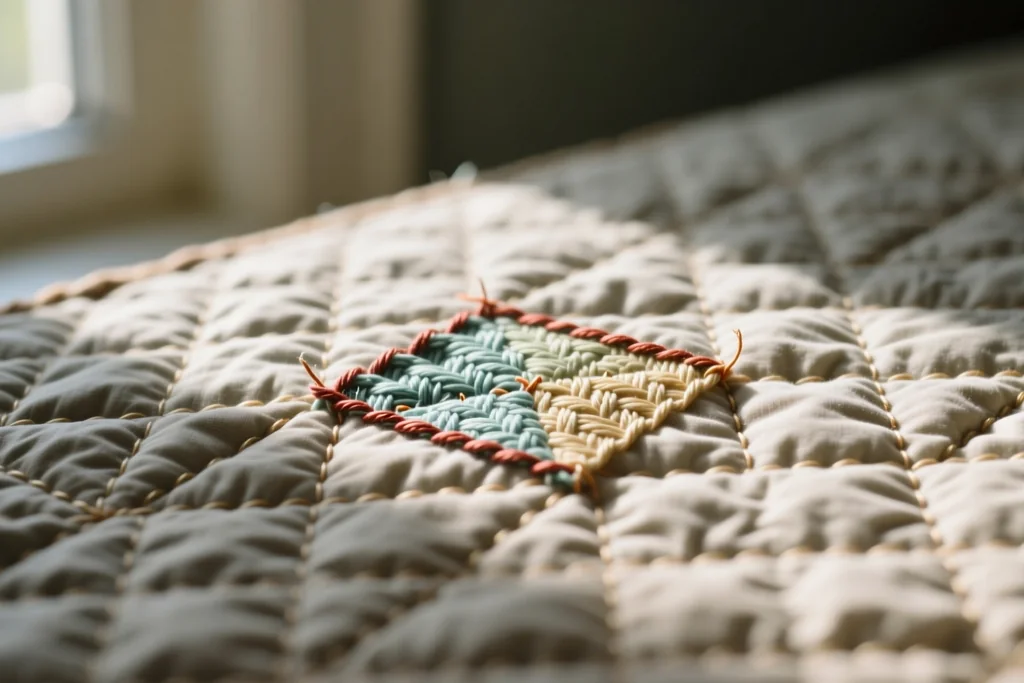
Re-stitch a broken quilting line with a matching thread and a needle, going over the line by a couple of inches at each end so the repair blends into the original work. For a worn area, lay a small patch of similar fabric over the top and stitch it down by hand.
Keep a note of the quilts you have repaired, with the thread you used. It helps when the same quilt comes back to you years later, and it turns a repair into part of the quilt's history rather than a flaw.
Making a Quilt Last a Lifetime
Caring for handmade quilts is mostly a matter of doing less. Air them, wash them rarely and gently, store them where they can breathe, and mend small faults before they have a chance to grow.
Handled that way, a quilt becomes a record of everything it has been through, with softness in the fabric and a slight fading along the folds. That is not damage; it is the evidence of a quilt that was wanted and used.
Use them, wash them with sense, and pass them on when the time comes. A quilt kept in perfect condition inside a cupboard has missed most of the point of being made.