Quilt Batting: Choosing the Right Warmth
Batting is the layer nobody sees and the one that decides how a quilt feels in the hand. It sets the warmth, the drape and even how the stitching behaves as the needle crosses the surface. Choose it carelessly and a beautiful top can end up stiff, flat or far too hot for the bed it was made for.
I have quilted with thin cotton battings, lofty polyester ones and everything in between. What I have learned is that the choice is really about the finished quilt rather than the batting itself. This guide to quilt batting is what I wish someone had explained before I bought my first roll.
What Batting Actually Does
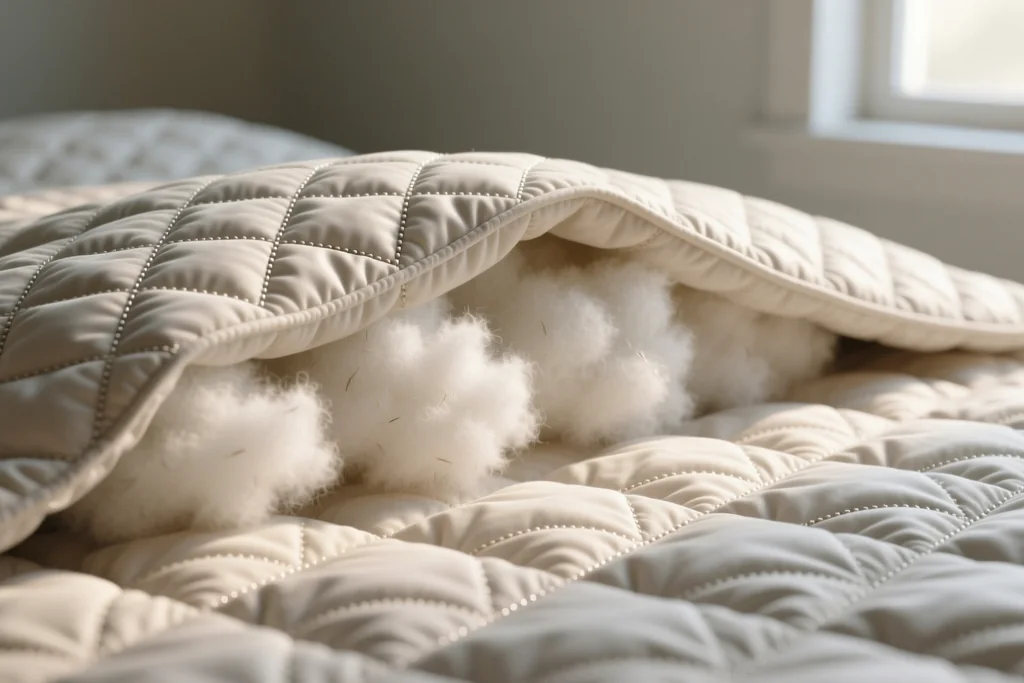
Batting is the middle layer of the sandwich, sitting between the pieced top and the backing. Its first job is warmth, because trapped air between the fibres is what holds heat in. Its second job is loft, which is simply how thick and puffy the layer sits.
It also carries the shape of the quilt. A batting with more body holds a puffier surface and makes the quilting stand out, while a flat one lets the piecing do all the talking. Neither is better, because they simply suit different quilts.
Finally, batting affects how the needle moves. Some battings are dense and resist the needle, while others are airy and glide. Knowing that before you start tells you how much to adjust your machine and your patience.
Loft: Low, Medium and High
Loft describes the height of the batting, and it is the easiest way to predict the look of the finished quilt. Low-loft batting gives a flat, traditional surface where the patchwork reads clearly and the quilting sits quietly in the background.
Medium loft is the comfortable middle ground. It gives a quilt enough softness to feel generous without turning the surface into a pillow. Most everyday quilts, the ones meant for using and washing, sit here.
High-loft batting makes a puffy, cosy quilt with pronounced quilting lines. It is warm and inviting, but it is also harder to quilt neatly because the layers can shift, and it takes up more room when the quilt is stored.
The Common Fibres and How They Behave
Batting is sold by fibre, and each one has a character that shows up in the finished quilt. The table below groups the common choices by warmth, how they quilt and what they ask of you.
| Batting fibre | Warmth and feel | What to expect |
|---|---|---|
| Cotton | moderate warmth, flat and firm | dense to stitch, no loft, and a gentle crinkle after washing |
| Polyester | warm for its weight, springy | glides under the needle, keeps its loft, dries quickly |
| Wool | warm and light, soft drape | lovely to stitch by hand, needs gentle washing, costs the most |
| Bamboo and blends | cool and fluid, light warmth | drapes beautifully, suits summer quilts, less springy |
Cotton is the traditional choice and it behaves like fabric rather than filling. It starts flat and picks up a soft crinkle after the first wash, which is precisely why many quilters choose it for an older-looking quilt.
Polyester keeps its puff no matter how often it is washed, which makes it a practical choice for a quilt that lives on a sofa. Wool is the warmest for its weight and the easiest to hand quilt, though it asks for care and costs the most.
Matching Batting to the Quilt You Are Making
The right question is not which batting is best but which quilt you are making. A bed quilt used every night wants something washable and durable, while a wall hanging wants to be flat so it hangs straight without bulging.
For a quilt that will be used and washed often, a low-loft cotton or a cotton and polyester blend is forgiving and predictable. For a lap quilt meant to be pulled over the knees on a cold evening, a little more loft makes the warmth obvious.
For a wall hanging or a table piece, keep the batting thin. Extra loft in something that hangs vertically does nothing except make the lower edge pull and the surface ripple.
Size, Quilting Distance and Shrinkage
Batting comes folded in packs and rolled on the bolt, and it must be larger than the quilt top on every side. An overhang of several inches on each edge gives you room to hold the layers without stitching through the edge of the batting.
Every batting is made to be quilted at a certain density, and the maker prints the maximum spacing on the wrapper. Quilt further apart than that and the quilt batting can separate and shift inside the finished quilt, so read the label before you plan your stitching lines.
Shrinkage varies by fibre, and cotton usually shrinks more than polyester. If you want to know how the finished quilt will look, wash a sample of the batting in the same way you intend to wash the quilt.
Buying and Storing Batting
Batting stores well as long as it stays dry. Leave it in its wrapper until you are ready to use it, and keep it away from damp, because moisture encourages a musty smell that is hard to remove once it has settled in.
A few habits make batting easier to handle over time.
- Unroll a rolled batting a day before layering so it relaxes and stops curling.
- Keep leftover pieces taped flat, because folded edges show up as ridges in a small quilt.
- Write the fibre and the maximum quilting distance on the scrap, so you know what you have.
- Store it away from direct sun, which weakens fibres over time.
Leftover batting is not waste. Small pieces are ideal for a cushion, a table runner or a small wall piece, and keeping them sorted by fibre makes them easy to reach for when a project needs filling.
Choosing the Warmth You Want
Quilt batting comes down to one question: what should this quilt feel like when it is finished? Answer that first, and the fibre and the loft almost choose themselves.
Take the time to hold a piece of batting in the shop. Feel how it presses and how it springs back, and imagine it across a whole bed. That single minute tells you more than any comparison of labels.
Whichever you choose, buy a little more than the top needs, keep a note of what you used, and quilt it at the spacing the maker asks for. Do that and the layer nobody sees will be the one that makes the quilt feel right.