Choosing Fabric for Quilts: What to Look For
Choosing fabric is the decision that shapes a quilt more than any other. The pattern can be simple and the stitching plain, but the wrong fabrics will still leave the quilt looking muddled. The right ones make a basic design look considered.
I have bought fabric for nearly every reason there is, and I have learned which choices I still like years later. This is what to look for when you choose fabric for quilts, from the feel of a bolt in the shop to the prints you cut at home.
What Good Quilting Fabric Feels Like
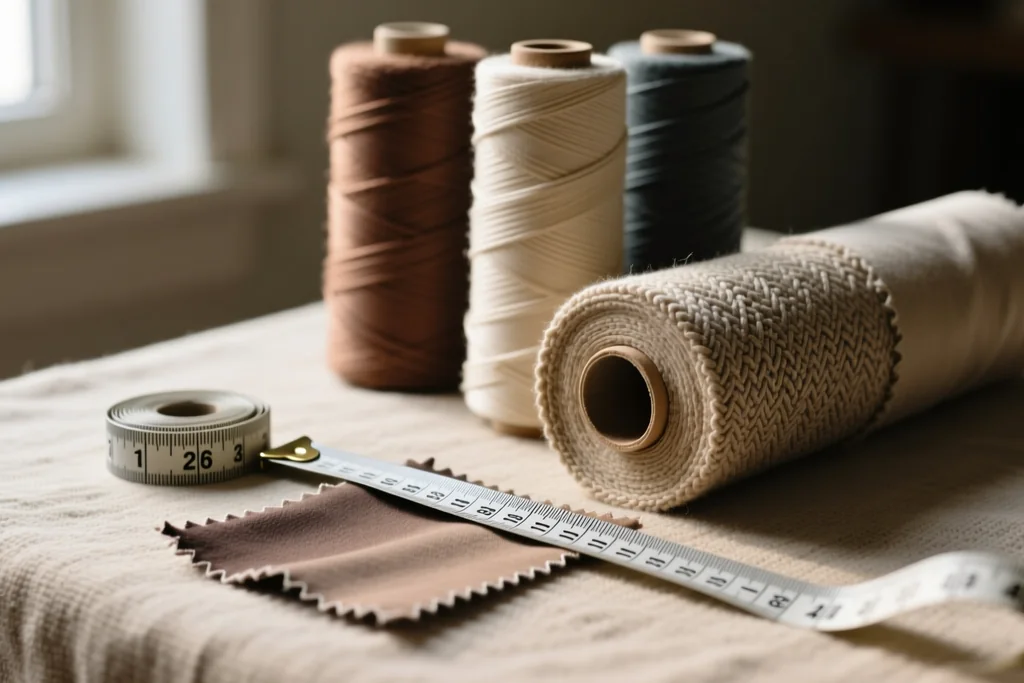
Quilting fabric should feel firm and smooth with a tight weave, not loose or slippery. Hold it up to the light: if you can see a lot of daylight through it, the weave is open and it will not hold a seam well. A slightly crisp cotton is exactly what you want.
Avoid fabric that stretches when you pull it gently across the grain, such as knits, because it will distort as you piece. Lightweight dress fabrics also tend to fray and shift inside a quilt. Upholstery fabric is usually far too heavy to press and piece comfortably.
Check the print as well as the cloth. A design that sits shallowly on the surface can fade with washing, while well-dyed cloth keeps its depth. The difference is usually obvious when two fabrics are compared side by side.
Cotton, Blends and Other Options
Cotton is the standard for good reason: it presses flat, it holds a crease, it does not slip, and it takes colour well. Most quilting fabric sold by the yard or in precut bundles is cotton, which is why quilting directions assume it.
Blends of cotton and polyester are common and can be pleasant to work with, but they press differently and tend to hold a memory of every crease. Linen and wool add lovely texture in the right project, though they behave differently and want more patience.
Mixing fibre types is fine as long as you accept their different habits. The safest rule for a first quilt is to keep the whole project in cotton, and then experiment in later projects once you know how each fabric behaves.
To Pre-Wash or Not to Pre-Wash
Pre-washing removes the finish that new fabric carries and takes care of most shrinkage before the quilt is cut. That matters most when the quilt will be washed often, or when you are mixing fabrics from different sources. Wash in cool water and dry gently.
The finish in new fabric is not a fault at all, and many quilters sew straight from the bolt. Unwashed fabric feels slightly stiffer, which can actually help accuracy while cutting and piecing. If you choose this route, simply wash the finished quilt with care the first time.
Whichever you choose, be consistent within one quilt. Mixing washed and unwashed fabric leaves you with uneven shrinkage after the first wash, and that shows clearly on the finished surface.
Reading Colour and Print Before You Cut
Colour in a quilt is really about value, which is how light or dark a fabric looks next to its neighbours. Two fabrics of very different colours can read as one if their values match. Before you cut, line the fabrics up and look at them from a distance or through half-closed eyes.
Prints add a second layer of decision, and the table below groups the common types by how they behave in a quilt.
| Fabric type | Where it works best | What to watch |
|---|---|---|
| Small prints | backgrounds and blenders | they become texture at a distance, which is often what you want |
| Large prints | feature blocks and borders | cut so the design stays visible rather than sliced through |
| Stripes and plaids | borders, sashing and binding | the direction has to be planned or the quilt looks restless |
| Solids | resting places and contrast | invaluable for giving the eye somewhere to pause |
A quilt usually needs more of the quiet fabrics than you expect. Mixing every strong print into one top is what makes a design feel busy rather than rich.
Scale is as important as colour. If every print in the quilt is the same size and density, the design has no rhythm, so mix small, medium and large patterns deliberately.
Buying Fabric You Will Still Like Later
Buying fabric for quilts is easiest when you have a plan, even a loose one. Decide the palette first and let the fabric follow. A shopping list of colours works far better than a hope that the right bolts will appear.
Buy a little more than you need for a project. An extra length of each fabric shows up in the binding, the backing or a repair later, and it is much easier to buy now than to match later. This is planning rather than hoarding.
Precut bundles, which are fabrics cut to a standard size and sold together, are a pleasant way to buy a whole collection at once and see how the prints sit together. They are also useful for testing a palette without committing to yardage.
Stash, Scraps and Building a Palette
A stash is simply fabric kept for future projects, and it is one of the real pleasures of quilting. What matters is that the stash stays usable: stored out of direct sun, folded so that the creases do not set, and sorted so that you can find what you own.
Scraps are as valuable as yardage in a scrappy quilt, and sorting them by colour makes them easy to use. A box for lights, a box for darks and a box for the colours you reach for most will save time on every future project.
Every so often, lay the stash out and look at it as a whole. It will show you which colours you actually use and which ones you bought on a whim, and that is useful before the next shopping trip.
- Look at the fabric weight: quilting cotton should feel firm, not flimsy.
- Check the colour against a window before you buy a large piece.
- Prewash a small sample the same way you will wash the finished quilt.
- Buy a little extra of anything you may need to replace later.
Fabric That Works Together
Choosing fabric for quilts comes down to a simple habit: settle the palette before the prints, and check the values before you cut. Do that and almost any pattern will look right.
Allow yourself one odd fabric in each quilt, the one that does not obviously belong. It is usually the piece that stops a palette from looking like a kit, and it becomes the detail you like best.
Buy slowly, keep what you enjoy, and cut without fear. Fabric is meant to be used, and a quilt is the best place to put it.